
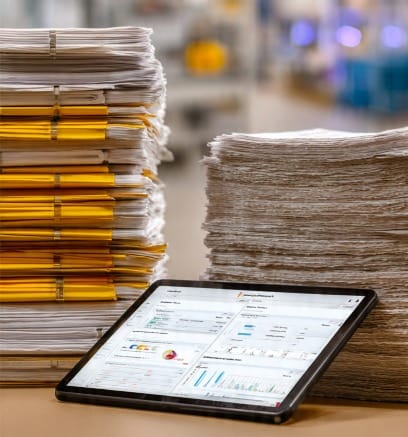
Manufacturing Execution System in Pharma: From Paper BMR to Digital Factory Floor
Walk into a modern pharma plant in 2026 and you’ll see fewer clipboards and more tablets. The reason: Manufacturing Execution System, or MES.
MES is the software layer between ERP and machines on the shop floor. In pharma, it replaces paper Batch Manufacturing Records with electronic BMR, or e-BMR, and enforces GMP in real-time. USFDA and Schedule M don’t mandate MES yet, but during audits, companies with MES get fewer 483 observations for data integrity and human errors.
1. What is MES in Pharmaceutical Manufacturing?
Definition as per ISA-95 standard: MES tracks and documents the transformation of raw materials to finished products.
In simple terms: ERP says “Make 1 lakh Paracetamol tablets”. MES tells the operator “Step 1: Weigh 50kg API. Scan barcode. System will not proceed until weight is within ±1%”.
Pharma MES vs Regular Manufacturing MES
Regular MES tracks speed + output. Pharma MES adds 4 layers:
- GMP compliance: 21 CFR Part 11 electronic signatures, audit trails
- Data integrity: ALCOA+ principles built into every entry
- Traceability: Link every tablet to API lot, excipient lot, machine, operator
- Deviation control: System stops the batch if SOP is violated
2. Why Pharma Companies Are Moving from Paper to MES
Paper BMR problems that trigger USFDA warnings:
- Back-dated entries, missing signatures
- Wrong calculations during weighing/dispensing
- “Pencil before pen” – operators fill BMR after work is done
- Batch release delays: 2-3 weeks to review 200-page paper BMR
MES fixes this by forcing “right first time”. Data is captured live, not after the fact.
3. Key Features of Pharma MES – What It Actually Does on Floor
3.1 Electronic Batch Record – e-BMR
No more printing 300 pages. Operator logs in with username + password → sees only steps for his machine. System auto-captures date, time, user ID. If operator tries to skip “line clearance”, system blocks next step. This is called “workflow enforcement”.
3.2 Electronic Signatures + Audit Trail – 21 CFR Part 11
Every entry is signed electronically. If someone changes “50.2kg” to “50.0kg”, audit trail records: old value, new value, who, when, why. No deletion possible. This directly addresses USFDA data integrity focus since 2015.
3.3 Weighing & Dispensing Control
Connects to weighing scales via interface. Operator must scan barcode of API drum. System checks: Is this the right API? Is it within retest date? Is it approved by QC? Only then unlocks the scale. Prevents 70% of mix-up errors.
3.4 Equipment Integration & OEE
MES connects to tablet press, coater, FBD. Captures rpm, temperature, pressure automatically. No manual “write temperature every 30 min”. Also calculates OEE – Overall Equipment Effectiveness, so management sees real machine efficiency.
3.5 Deviation & CAPA Management
If operator enters wrong value, MES raises electronic deviation instantly. QA gets alert. No “hide and fix later”. This culture shift is what USFDA wants to see.
4. MES vs ERP vs LIMS: Don’t Confuse Them
| System | Role in Pharma | Example |
|---|---|---|
| ERP | Business planning: orders, inventory, finance | SAP, Oracle |
| MES | Shop floor execution: e-BMR, weighing, equipment control | Werum PAS-X, Siemens Opcenter, Rockwell PharmaSuite |
| LIMS | Lab data: COA, stability, QC testing results | LabVantage, LabWare |
MES is the bridge. It takes production order from ERP and sends batch results + genealogy back to ERP after release.
5. Regulatory Benefits: Schedule M + USFDA Compliance
- Schedule M Clause 14: Requires documentation. e-BMR with audit trail satisfies this better than paper
- Data Integrity ALCOA+: Attributable, Legible, Contemporaneous, Original, Accurate. MES enforces this by design
- Faster Batch Release: QA reviews e-BMR in 2-3 days vs 2-3 weeks for paper. Electronic review + e-signatures
- Recall traceability: If API lot is recalled, MES shows exactly which finished batches used it in seconds
6. Implementation Challenges in Indian Pharma
- Cost: MES license + validation can be ₹2-5 crore for mid-size plant. ROI comes in 2-3 years via less rework + faster release
- Change management: Operators used to paper for 20 years resist tablets. Training is 50% of success
- Validation: MES itself must be validated as per GAMP 5. “Computerized system validation” is mandatory
- Power/IT infra: If Wi-Fi fails, line should not stop. Good MES has offline mode + sync later
7. Is MES Mandatory for Pharma in India?
As of April 2026, No. Schedule M still allows paper BMR. But CDSCO inspections are getting stricter on data integrity. Companies exporting to US/EU are adopting MES fast because USFDA 483s for “lack of electronic controls” are rising.
Think of MES like CCTV for manufacturing: Not legally mandatory, but absence is questioned during audit if you have repeated human errors.
Key Takeaway for Pharma Professionals
MES is not just “software”. It’s GMP culture in code. It shifts QA from “inspect quality at end” to “build quality into process”.
If you’re in QA, Production, or Validation, learning MES + 21 CFR Part 11 is the most career-proof skill right now. Even if your plant is still paper-based, audits will ask: “What is your plan for data integrity and electronic records?”
Paper BMR had 100 years. e-BMR with MES is the next 100 years.
Disclaimer
This content is for educational purposes for pharma, QA, and production professionals. MES implementation must follow GAMP 5, 21 CFR Part 11, and your company’s Computerized System Validation policy. Regulatory requirements differ by country and agency. Always consult your QA and IT compliance teams before selecting or validating MES software.
About the Author
Mahummed Asif works in pharmaceutical manufacturing/validation with 16 years experience in GMP documentation and digital transformation. Article references ISA-95, GAMP 5, and USFDA Data Integrity guidance as of April 2026.
Working on MES validation? Contact us for CSV checklists and e-BMR templates.