
CAPA and CAPA Effectiveness in the Pharmaceutical Industry
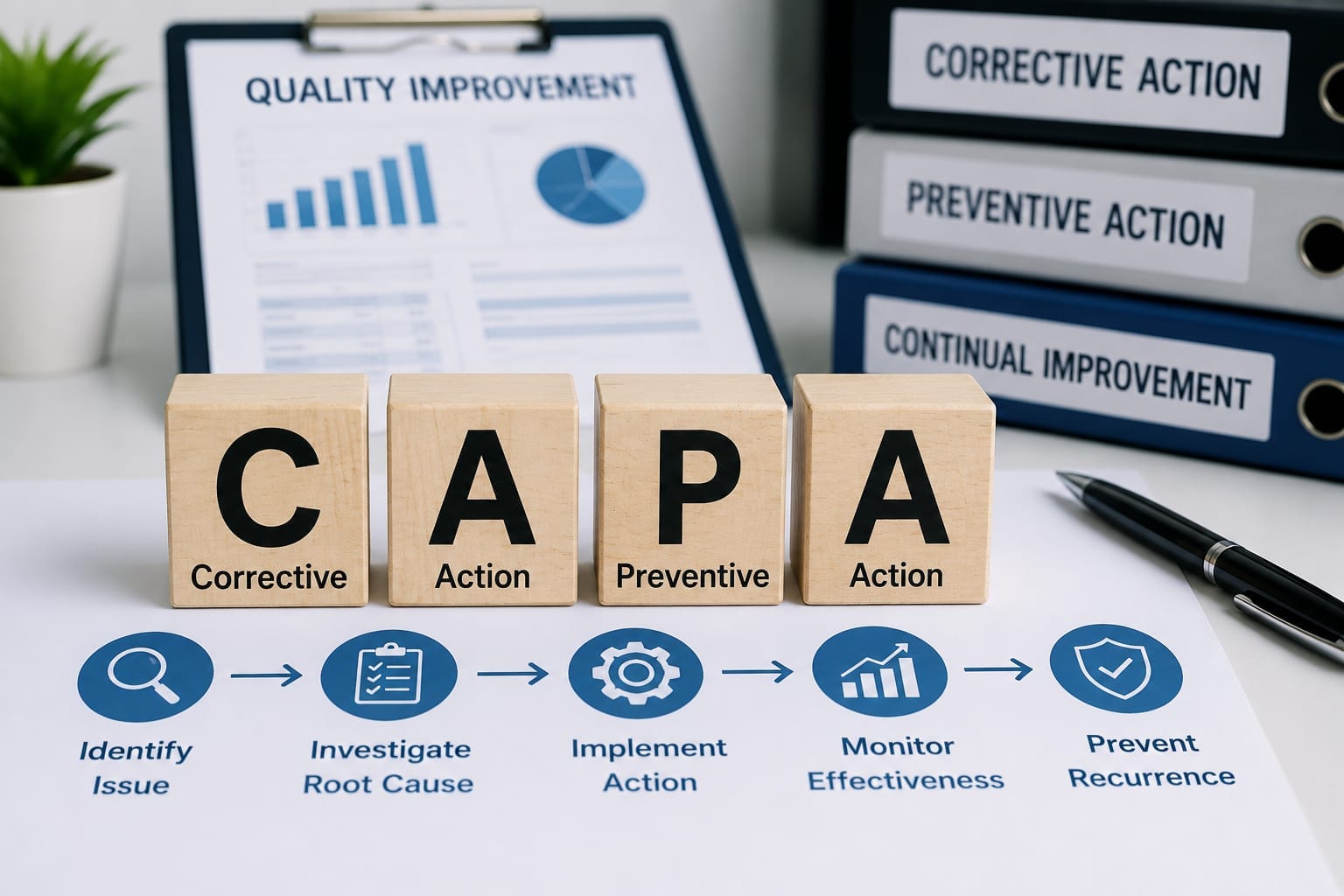
“CAPA Process in Pharmaceutical Quality Management System”
Corrective and Preventive Action (CAPA) is one of the most critical elements of a Pharmaceutical Quality System (PQS). Regulatory agencies worldwide, including the FDA, EMA, MHRA, and WHO, expect pharmaceutical manufacturers to establish robust CAPA systems to identify, investigate, correct, and prevent quality issues. An effective CAPA program not only ensures compliance with Good Manufacturing Practices (GMP) but also drives continuous improvement across manufacturing, laboratory, engineering, and quality operations.
What is CAPA?
CAPA stands for Corrective Action and Preventive Action. It is a systematic approach used to investigate deviations, complaints, audit findings, out-of-specification (OOS) results, customer feedback, and other quality events to determine root causes and implement actions that prevent recurrence.
- Corrective Action: Action taken to eliminate the cause of a detected nonconformity or quality issue.
- Preventive Action: Action taken to eliminate the cause of a potential nonconformity before it occurs.
A well-designed CAPA system transforms quality incidents into opportunities for process improvement and risk reduction.
Importance of CAPA in Pharmaceuticals
Pharmaceutical products directly impact patient health and safety. Therefore, quality failures can lead to serious consequences including product recalls, warning letters, import alerts, regulatory observations, and reputational damage.
An effective CAPA system helps organizations:
- Maintain GMP compliance.
- Reduce recurring deviations.
- Improve product quality and consistency.
- Strengthen inspection readiness.
- Enhance risk management practices.
- Support continuous process improvement.
- Protect patient safety.
Typical Sources of CAPA
CAPAs may originate from various quality system elements, including:
- Manufacturing deviations
- Out-of-Specification (OOS) investigations
- Out-of-Trend (OOT) results
- Customer complaints
- Product recalls
- Internal audits
- Regulatory inspections
- Supplier quality issues
- Environmental monitoring excursions
- Risk assessments
- Change control reviews
CAPA Process Flow
Although organizations may have different procedures, a typical CAPA workflow includes:
- Issue Identification
- Problem Description
- Risk Assessment
- Root Cause Investigation
- CAPA Plan Development
- Implementation of Actions
- Effectiveness Verification
- Management Review and Closure
Root Cause Analysis in CAPA
Root cause determination is the foundation of an effective CAPA system. Without identifying the true root cause, corrective actions often address only symptoms, leading to recurrence.
Common root cause analysis tools include:
- 5 Why Analysis
- Fishbone (Ishikawa) Diagram
- Fault Tree Analysis
- Failure Mode and Effects Analysis (FMEA)
- Process Mapping
- Pareto Analysis
What is CAPA Effectiveness?
CAPA effectiveness refers to the verification that implemented corrective and preventive actions have successfully eliminated the identified root cause and prevented recurrence of the issue.
Many regulatory observations occur because organizations close CAPAs without adequately demonstrating effectiveness. Regulatory agencies expect objective evidence showing that actions have achieved their intended results.
Why CAPA Effectiveness Checks are Important
Effectiveness checks provide assurance that:
- The root cause was correctly identified.
- Implemented actions were adequate.
- The issue does not recur.
- Risks have been reduced to acceptable levels.
- The CAPA can be formally closed.
Methods for Evaluating CAPA Effectiveness
Organizations may use one or more of the following methods:
- Trend analysis of deviations.
- Repeat audits.
- Process performance monitoring.
- Review of complaint data.
- Environmental monitoring trends.
- Training effectiveness assessments.
- Statistical process control.
- Product quality review data.
The effectiveness review period should be scientifically justified and sufficient to generate meaningful data.
Examples of CAPA Effectiveness Checks
Example 1: Recurring Manufacturing Deviation
If a recurring equipment setup error caused multiple deviations, effectiveness may be demonstrated by monitoring production batches for six months after procedural changes and operator retraining. No recurrence during the monitoring period would support CAPA effectiveness.
Example 2: Laboratory OOS Investigation
Following revision of an analytical method and analyst retraining, effectiveness can be evaluated by reviewing subsequent analytical results and audit findings over a defined period.
Example 3: Customer Complaint Reduction
If packaging defects generated complaints, effectiveness may be verified through complaint trend analysis, line inspections, and process capability studies.
Common CAPA Deficiencies Observed During Inspections
Regulatory inspectors frequently identify weaknesses such as:
- Incomplete root cause investigations.
- Closure of CAPAs without effectiveness verification.
- Poor documentation practices.
- Missed implementation timelines.
- Recurring deviations despite previous CAPAs.
- Lack of management oversight.
- Failure to assess product impact.
- Inadequate risk assessment.
Best Practices for Effective CAPA Management
- Establish a risk-based CAPA process.
- Use structured root cause analysis tools.
- Define measurable effectiveness criteria.
- Assign clear ownership and accountability.
- Monitor CAPA metrics and trends.
- Conduct periodic management reviews.
- Ensure timely implementation and closure.
- Integrate CAPA with quality risk management.
- Maintain complete documentation.
- Use electronic quality management systems where applicable.
Key Performance Indicators (KPIs) for CAPA Programs
- CAPA closure rate
- On-time completion percentage
- CAPA recurrence rate
- Average investigation cycle time
- Effectiveness failure rate
- Audit observation trends
- Deviation recurrence trends
Conclusion
A robust CAPA system is essential for maintaining pharmaceutical quality, regulatory compliance, and patient safety. CAPA effectiveness verification is equally important because it demonstrates that corrective and preventive actions have successfully addressed the root cause and reduced future risks. Organizations that implement data-driven, risk-based CAPA programs are better positioned to achieve operational excellence and remain inspection-ready.
Regulatory Disclaimer
Disclaimer: This article is intended solely for educational and informational purposes. The content does not constitute regulatory, legal, quality, validation, or compliance advice. Pharmaceutical manufacturers should always refer to applicable regulations, current Good Manufacturing Practices (cGMP), ICH guidelines, FDA guidance documents, EU GMP requirements, WHO guidelines, and company-specific procedures when establishing or managing CAPA systems. Regulatory expectations may vary depending on jurisdiction, product type, and manufacturing operations. Readers are encouraged to consult qualified quality and regulatory professionals before implementing any recommendations discussed in this article.

About the Author
Mahummed Asif is a pharmaceutical QA professional with 16 years experience in GMP, QMS, Product Complaint Management, Change control, risk management, and USFDA audit preparation.