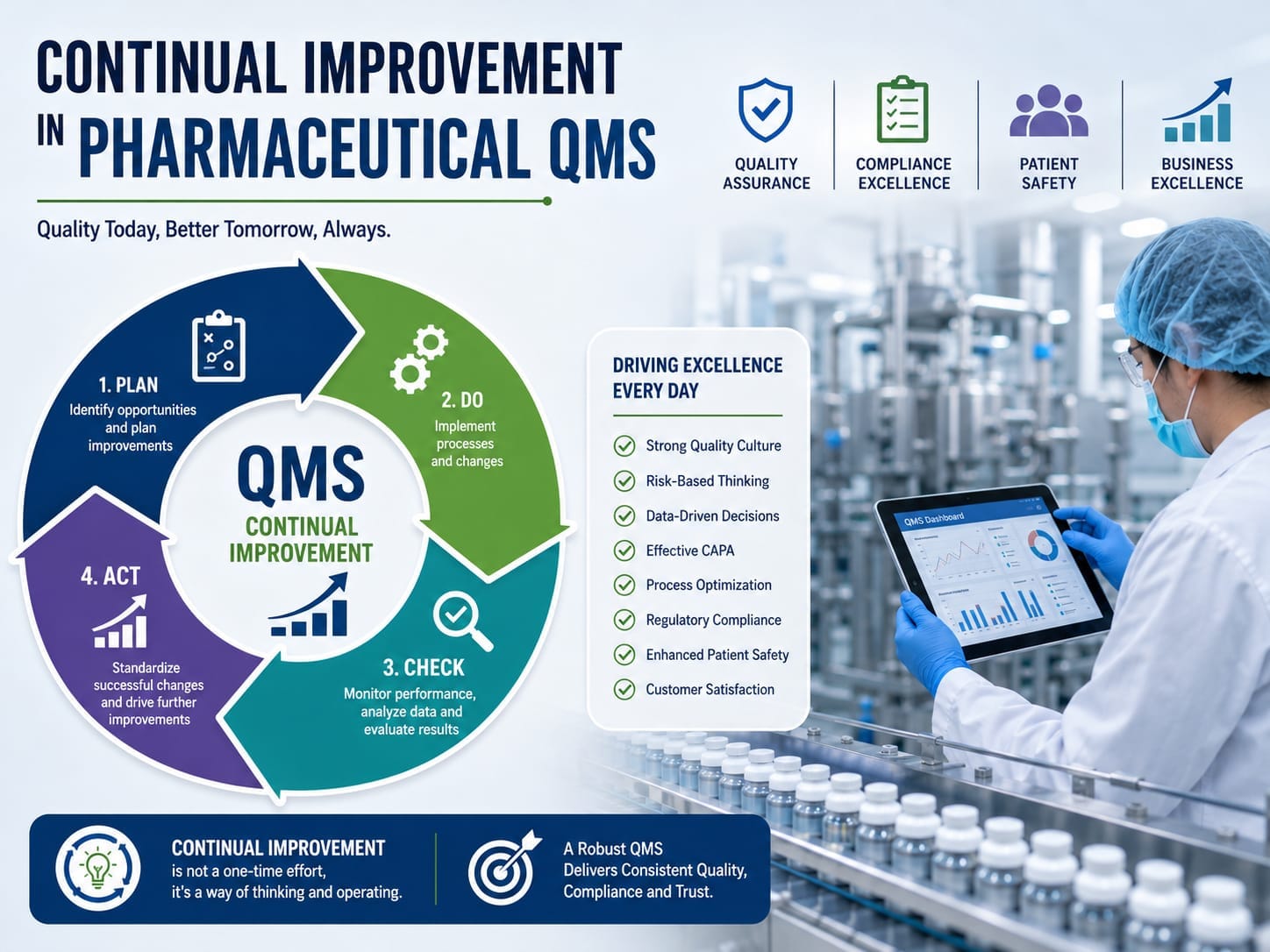
Continual Improvement in Pharmaceutical QMS

Continual Improvement in Pharmaceutical QMS Continual improvement is a fundamental principle of ICH Q10 and an essential component of a mature Pharmaceutical Quality Management System (QMS). Organizations should continually evaluate processes, analyze quality data, identify improvement opportunities, and implement corrective actions to enhance product quality, operational efficiency, and regulatory compliance. Quality improvement should be proactive … Read more
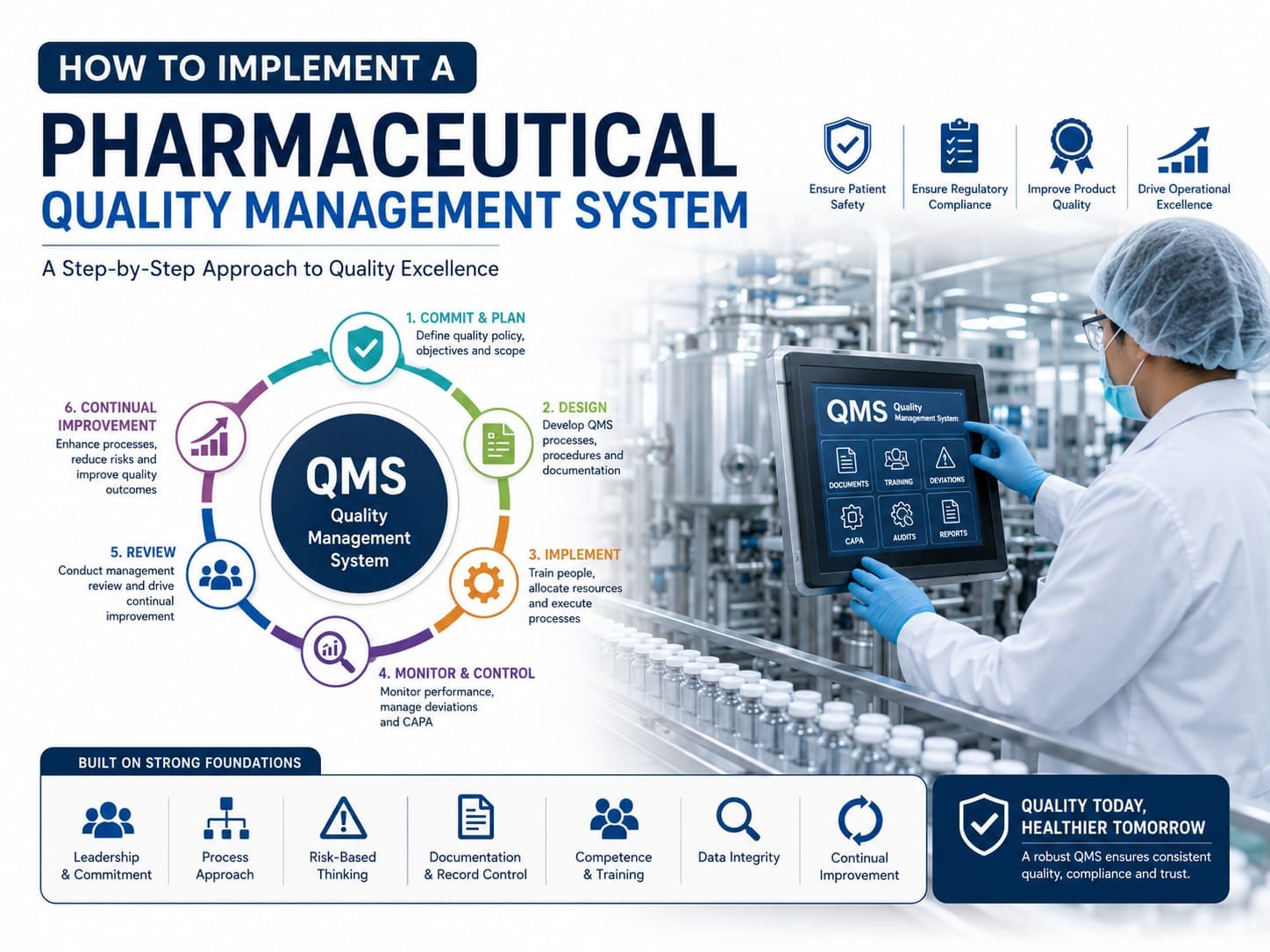
How to Implement a Pharmaceutical Quality Management System

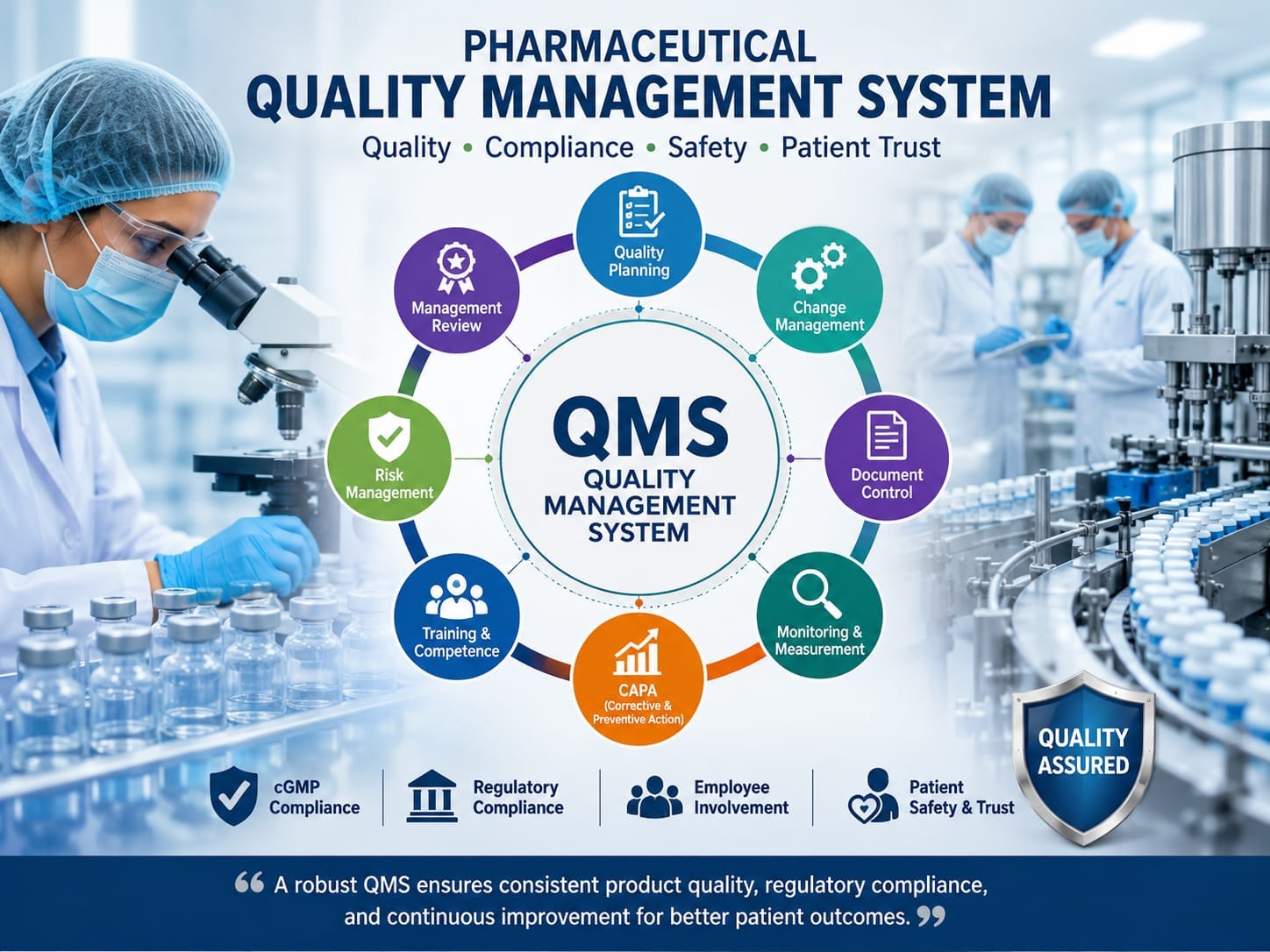
How to Implement a Pharmaceutical Quality Management System Implementing an effective Pharmaceutical Quality Management System (QMS) requires more than creating procedures and documentation. It involves establishing a quality-driven culture supported by leadership, trained personnel, robust processes, and continual improvement. A well-designed QMS ensures compliance with global regulatory expectations while improving operational efficiency and product quality. … Read more

Pharmaceutical Quality Management System (QMS)

Pharmaceutical Quality Management System (QMS): Complete Guide for Pharma Professionals Pharmaceutical Quality Management System (QMS): The Complete Guide for Pharma Professionals The pharmaceutical industry is one of the most highly regulated industries worldwide. Every medicine manufactured must consistently meet predefined standards of safety, efficacy, identity, purity, and quality. To achieve this objective, pharmaceutical companies establish … Read more

Annual Product Quality Review (APQR) in Pharma

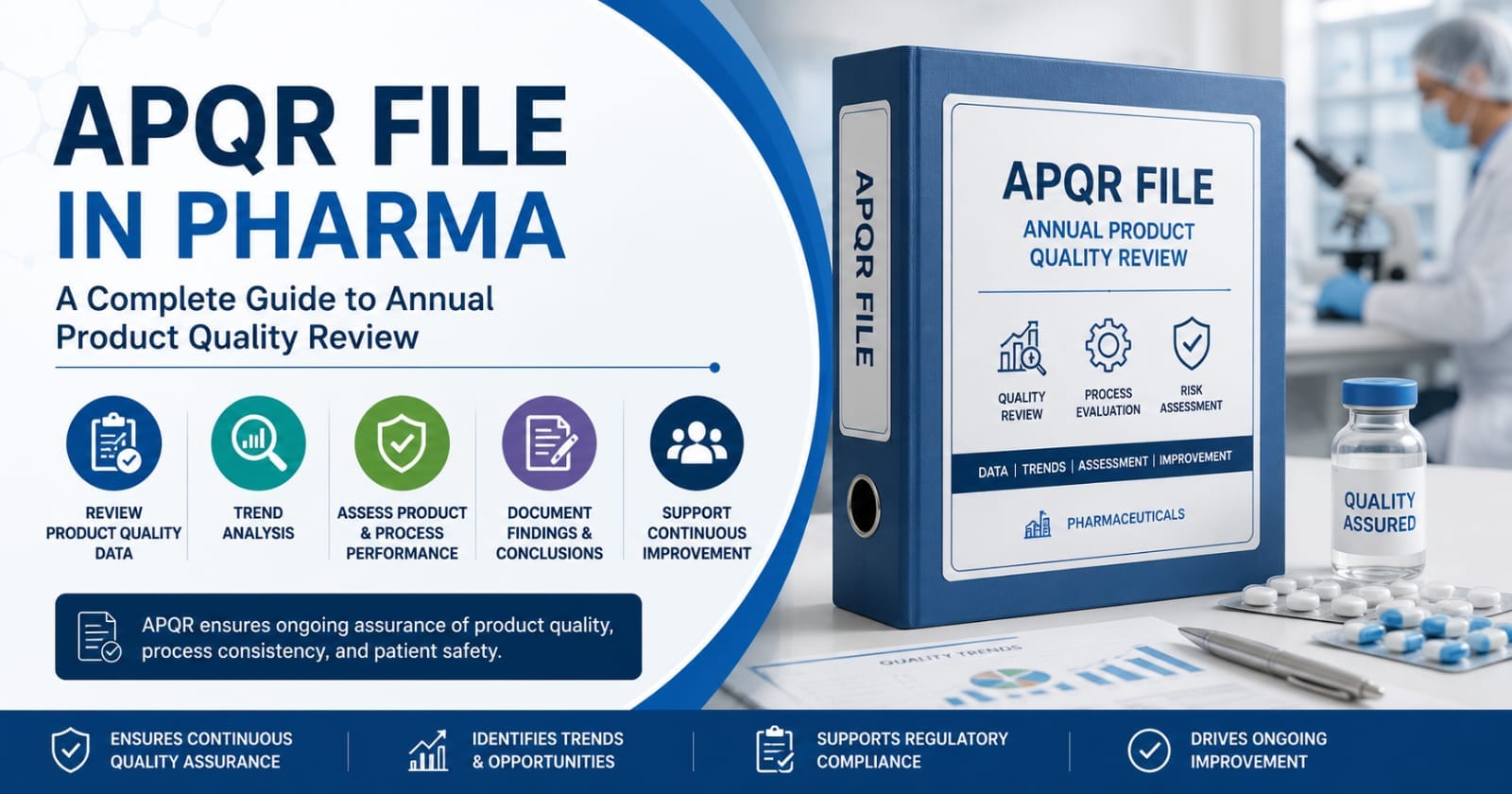
"Annual Product Quality Review (APQR) workflow in the pharmaceutical industry showing data analysis, quality trends, compliance review, and continuous improvement."

APQR in Pharma: Complete Guide to Annual Product Quality Review (2026) APQR in Pharma: Complete Guide to Annual Product Quality Review Annual Product Quality Review (APQR) is one of the most critical Quality Management System (QMS) activities performed by pharmaceutical manufacturers. It provides a structured annual evaluation of manufacturing performance, analytical trends, product quality, process … Read more

483 Observations related to Inadequate Investigations

FDA 483 Observations Related to Inadequate Investigations in Pharmaceutical Manufacturing FDA Form 483 Observations Related to Inadequate Investigations in Pharmaceutical Manufacturing In the pharmaceutical industry, investigations are a critical component of the Quality Management System (QMS). Whether dealing with deviations, out-of-specification (OOS) results, customer complaints, environmental monitoring excursions, or product quality defects, a thorough and … Read more

FTIR (Fourier Transform Infra-Red Radiation)

Infrared spectroscopy (IR spectroscopy) refers to the branch of spectroscopy that focuses on the infrared portion of the electromagnetic spectrum, which consists of light characterized by longer wavelengths and lower frequencies than those of visible light. This field encompasses a variety of techniques, primarily centered around absorption spectroscopy. Capabilities of Infrared Analysis Applications of Infrared … Read more

Selection criteria for an auditor for vendor qualification / audit

The following factors are used to choose an auditor for vendor qualification: 1. Experience and Qualifications: 2. Technical Proficiency: 3. Auditing Proficiency: 4. Self-reliance and impartiality: 5. References and Reputation: 6. Adherence to Regulatory Mandates: 7. Audit Methodology and Approach: Organizations can choose a skilled auditor to assess vendors and guarantee adherence to industry standards and legal obligations by taking these factors into account.

QUALITY RISK ASSESSMENT

Risk assessment consists of the identification of hazards and the analysis and evaluation of risks associated with exposure to those hazards as defined below. Quality risk assessments begin with a well-defined problem description or risk question. When the risk in question is well defined, an appropriate risk management tool and the types of information needed … Read more

UNDERSTANDING OF SUPAC GUIDELINES (SCALE UP AND POST APPROVAL CHANGES):

This guidance provides recommendations to sponsors of new drug applications (NDA’s), abbreviated new drug applications (ANDA’s), and abbreviated antibiotic applications (AADA’s) who intend, during the post approval period, to change: SU: Scale-up during original dossier assessment. Note that this is not SU during development. Consider changes made after the Biobatch   PAC: Post-PQ/post-approval, i.e. Variations. … Read more