
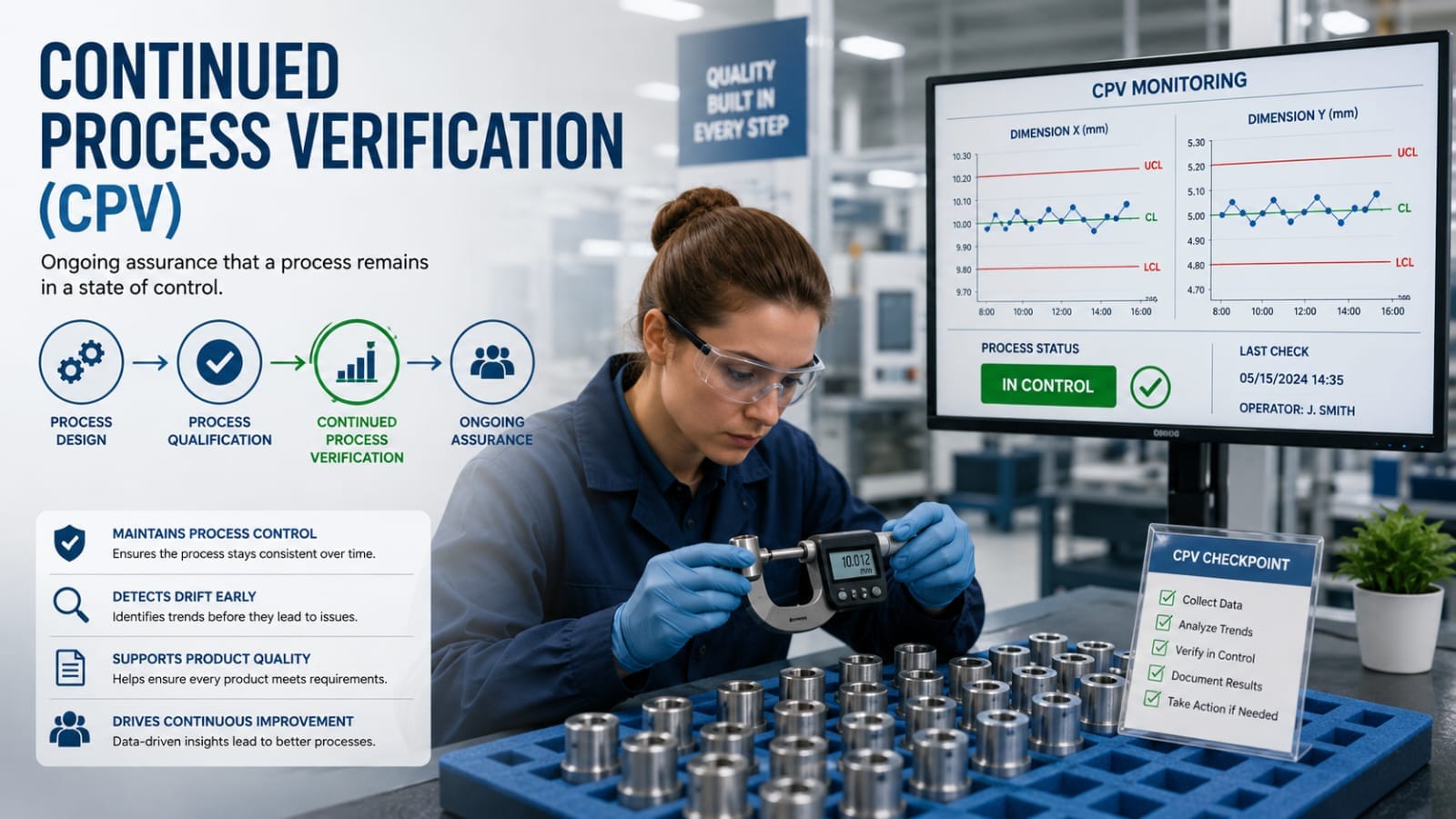
FDA and Global Regulatory Inspection Expectations for CPV
Regulatory authorities expect Continued Process Verification (CPV) to be an integral part of the Pharmaceutical Quality System (PQS). During inspections, investigators typically evaluate whether manufacturers have established a scientifically justified and risk-based program to continuously monitor commercial manufacturing processes.
Inspectors commonly review:
- Documented CPV procedures and responsibilities
- Identification and justification of Critical Quality Attributes (CQAs), Critical Process Parameters (CPPs), and Critical Material Attributes (CMAs)
- Statistical methods used for data evaluation
- Control charts and process capability analyses
- Trend reports and management review records
- Investigations of adverse trends, OOS, OOT, and deviations
- Corrective and Preventive Action (CAPA) implementation and effectiveness
- Annual Product Quality Review (APQR/PQR) reports
- Evidence of continual process improvement
- Data integrity controls and electronic record management
Common Deficiencies Observed During Regulatory Inspections
Inspection findings frequently reveal weaknesses in CPV implementation. Common deficiencies include:
- Failure to establish an effective CPV program
- Insufficient monitoring of CPPs and CQAs
- Inadequate statistical analysis of manufacturing data
- Failure to investigate recurring adverse trends
- Poor documentation of trend evaluations
- Incomplete management review of CPV data
- Lack of scientifically justified alert and action limits
- Failure to verify CAPA effectiveness
- Poor integration of CPV with change control and risk management
- Inadequate data integrity practices
These deficiencies may lead to regulatory observations, warning letters, increased inspection scrutiny, or delays in product approvals if process control cannot be adequately demonstrated.
Benefits of Continued Process Verification
A well-designed CPV program provides significant advantages for pharmaceutical manufacturers by supporting both compliance and operational excellence.
- Maintains validated process performance throughout the product lifecycle
- Improves product quality and consistency
- Detects process drift before failures occur
- Reduces deviations, OOS, and OOT results
- Minimizes batch rejection and rework
- Supports risk-based decision making
- Enhances regulatory compliance
- Improves manufacturing efficiency and productivity
- Strengthens patient safety
- Supports continual improvement initiatives
- Provides confidence during regulatory inspections
Challenges in Implementing CPV
Although the benefits of CPV are substantial, successful implementation requires organizational commitment, technical expertise, and reliable data systems.
Common challenges include:
- Large volumes of manufacturing data
- Integration of multiple electronic systems
- Selection of appropriate statistical techniques
- Limited statistical knowledge among personnel
- Maintaining high-quality and complete data
- Defining meaningful alert and action limits
- Resource constraints for routine monitoring
- Managing process changes while maintaining validated status
Best Practices for an Effective CPV Program
The following practices can help establish a sustainable and inspection-ready CPV program:
- Develop comprehensive written CPV procedures.
- Use Quality Risk Management (QRM) to prioritize monitoring activities.
- Monitor scientifically justified CQAs, CPPs, and CMAs.
- Employ validated statistical software where appropriate.
- Review process performance at predefined intervals.
- Investigate statistically significant trends promptly.
- Ensure CAPAs address root causes and verify effectiveness.
- Integrate CPV outputs with change control and knowledge management.
- Train personnel in statistical concepts and lifecycle validation.
- Leverage automation and digital dashboards for real-time monitoring.
- Periodically reassess monitoring plans based on process knowledge and product lifecycle.
Relationship Between CPV and the Pharmaceutical Quality System (PQS)
Continued Process Verification is not a standalone activity. It is closely linked with other quality system elements, including:
- Quality Risk Management (QRM)
- Deviation Management
- CAPA System
- Change Control
- Annual Product Quality Review (APQR/PQR)
- Knowledge Management
- Supplier Quality Management
- Equipment Qualification and Maintenance
- Calibration Program
- Management Review
Integrating CPV within the broader Pharmaceutical Quality System enables organizations to make data-driven decisions, proactively manage risks, and foster a culture of continual improvement.
Frequently Asked Questions (FAQs)
1. Is Continued Process Verification mandatory?
Yes. Lifecycle process validation, including Continued Process Verification, is expected by major global regulatory authorities such as the US FDA and the European Medicines Agency (EMA) for commercial pharmaceutical manufacturing.
2. What is the difference between PPQ and CPV?
Process Performance Qualification (PPQ) demonstrates that the manufacturing process performs as intended before routine commercial production. Continued Process Verification (CPV) provides ongoing assurance that the process remains in a state of control throughout the commercial lifecycle.
3. Which products require CPV?
CPV principles apply to a broad range of pharmaceutical products, including solid oral dosage forms, sterile products, biologics, vaccines, topical products, and other commercial manufacturing processes where continued assurance of process performance is required.
4. How often should CPV data be reviewed?
The review frequency should be based on product risk, process complexity, manufacturing volume, and historical performance. Reviews may occur on a batch-by-batch basis, monthly, quarterly, or annually as defined in approved procedures.
5. What statistical tools are commonly used in CPV?
Common tools include Statistical Process Control (SPC), control charts, process capability analysis (Cp/Cpk, Pp/Ppk), trend analysis, regression analysis, Pareto analysis, and other statistically justified methods appropriate for the process.
Conclusion
Continued Process Verification represents a fundamental shift from traditional validation toward a lifecycle-based approach focused on sustained process performance and continual improvement. By continuously monitoring manufacturing data, evaluating process capability, and responding proactively to emerging trends, pharmaceutical manufacturers can maintain validated process performance, improve operational efficiency, and consistently deliver high-quality medicines to patients.
A successful CPV program combines scientific process understanding, quality risk management, statistical analysis, robust documentation, and effective management oversight. As regulatory expectations continue to emphasize data-driven decision-making and lifecycle management, organizations that invest in mature CPV systems will be better positioned to achieve compliance, operational excellence, and long-term product quality.
References
- US FDA – Process Validation: General Principles and Practices (2011)
- EU GMP Guidelines – Annex 15: Qualification and Validation
- ICH Q8(R2): Pharmaceutical Development
- ICH Q9(R1): Quality Risk Management
- ICH Q10: Pharmaceutical Quality System
- ICH Q12: Technical and Regulatory Considerations for Pharmaceutical Product Lifecycle Management
- PIC/S Guide to Good Manufacturing Practice
- WHO Technical Report Series – Good Manufacturing Practices
Regulatory Disclaimer
This article is intended solely for educational and informational purposes. It summarizes publicly available regulatory concepts and industry best practices related to Continued Process Verification (CPV) in pharmaceutical manufacturing. The content should not be interpreted as legal, regulatory, or quality system advice.
Readers should always consult the latest versions of applicable regulations, guidance documents, pharmacopeial requirements, and their organization’s approved procedures before making decisions related to process validation, manufacturing, or regulatory compliance. Regulatory expectations may vary depending on the product type, manufacturing process, and regional health authority requirements.